Crate vs playpen verdict for puppies
Playpen, with a crate inside it
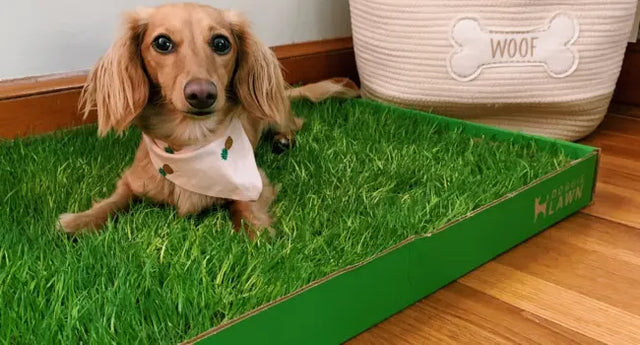
In a crate vs playpen contest for potty training, the playpen wins 3 rounds to 2, and the margin is the workday. Humane World for Animals says a puppy under 6 months shouldn't be crated more than three or four hours, because they can't hold it longer. Put a bed at one end of a playpen and a grass potty at the other, and nobody asks them to.
Still, the crate wins two rounds outright: the den instinct that teaches a puppy to hold it, and overnight sleep. So our real answer is both: crate inside the pen, door open. Below, where each one earns its place.
Our pick
Playpen
7.4 vs 5.9
Wins 3 of 5 rounds
Three rounds to the pen, led by room for a potty and the workday. Two to the crate: the den instinct and overnight sleep, which is why the crate goes inside the pen, not the closet.
- Room for a potty spot 9.5 vs 2.0
- Leaving a puppy while you work 9.0 vs 3.5
- Cost & setup 7.0 vs 6.5
Crate vs playpen at a glance
A bedroom versus a studio apartment
Crate vs playpen for puppy training comes down to square footage. Per the AKC, a crate is a den: room to stand, turn and lie down, and no more, so the puppy can't go in one corner and sleep in another. Playpen panels, by contrast, give a dog room to move, play, eat and drink.
Both contain a puppy. Only one has room for a bathroom.
Two cards, two footprints. Read the best-for lines first: the pen is for hours you're gone, the crate for hours your puppy sleeps.

Playpen
Room to move bed, water, toys and a potty
Best for Puppies left longer than they can hold it, and anyone working away from home
- Fits a real grass potty in one corner
- Folds flat and comes with dividers (AKC)
- No den feeling, so holding it isn't taught

Crate
Den sized stand, turn, lie down
Best for Overnight, short absences and teaching a puppy to hold it
- Uses the instinct not to soil the sleeping spot (AKC)
- Under 6 months: 3 to 4 hours max (Humane World)
- Never put the grass pad inside it
Playpen vs crate side by side
Five rounds, scored on a working owner's week
Here's the playpen vs crate scorecard, 1 to 10 a round. Know the crate training history & methods first: the den idea is decades old and debated, but its practical effect, a puppy who holds it in a small sleeping space, is what trainers rely on. Asking crate or playpen for puppy while at work? Start with round three.
Rounds two, three and five go to the pen, one and four to the crate. Every note cites Humane World for Animals, the AKC or DoggieLawn's crate guide.
Round 1
Bladder control & the den instinct
Crate wins
Crate's round. Dogs generally prefer not to soil their sleeping area, the AKC's potty guide says, so a den-sized crate teaches a puppy to hold it and signal. Pens are too big to trigger that instinct, which is exactly why they need a potty spot inside.
Round 2
Room for a potty spot
Playpen wins
Crates have no room for one and shouldn't: DoggieLawn's crate guide says never put the lawn inside, because bed and bathroom must stay separate. Pens hold a bed at one end and a grass pad at the other, the whole point of the playpen vs crate for puppy debate.
Round 3
Leaving a puppy while you work
Playpen wins
Humane World caps crate time at three or four hours for puppies under 6 months and adults still being house-trained. Per the AKC's table, a 3-month-old can hold it about three hours, a 6-month-old about six. Any workday runs past both, so the pen with a potty inside wins, and AKC trainer Mary Janek still suggests someone let the puppy out once or twice a day.
Round 4
Overnight sleep
Crate wins
Crate again. Most puppies can sleep through the night without a potty break by about 4 months, the AKC says, and Humane World suggests the crate in or near your bedroom so you hear the whine that means outside, now. Pens work overnight too, but a sleepy puppy with floor space tends to use the floor.
Round 5
Cost & setup
Playpen wins
Close. One pen fits a puppy at 8 weeks and at 8 months, folds flat and splits with dividers, per the AKC. Crates are bought for adult size and sectioned down while the puppy grows. Pens take more floor space, a real cost in a studio apartment.
Crate vs playpen comparison table
Time limits, space & who it suits
Hours below are the published limits from Humane World for Animals and the AKC, read on October 19, 2026. Treat them as ceilings, not targets.
Rows run from what each one is to who it suits. Two time-limit rows carry the decision: if your day runs past them, the crate alone isn't the answer.
| Feature | Playpen | Crate |
|---|---|---|
| What it is | Connecting panels, indoor or out (AKC) | A den-sized box: stand, turn, lie down |
| Teaches holding it | No, too much room | Yes, through the den instinct (AKC) |
| Potty spot inside | Yes, a grass pad in one corner | Never (DoggieLawn crate guide) |
| Puppy under 6 months, max stretch | As long as the potty is fresh and someone visits | 3 to 4 hours (Humane World) |
| Overnight | Works, but floor accidents are likely | Best choice, near your bedroom at first |
| Grows with the puppy | Dividers widen the space (AKC) | Buy adult size, divide it down (AKC) |
| Floor space | A corner of a room | A corner of a corner |
| Teething puppies | Skip plastic panels (AKC) | Wire or plastic both fine |
| Travel | Folds flat | Doubles as a car and vet crate |
Crate & playpen pros & cons
What you gain, what you give up
Four pros and three cons each, from the rounds above.
Pen cons are floor space and habit, crate cons are hours. Nesting one inside the other cancels most of both lists.
Playpen
Pros
- Room for a grass potty, bed, water and toys
- No hour limit when the bathroom is inside
- Folds flat, dividers adjust the size
- A safe zone for guests and travel
Cons
- Doesn't teach a puppy to hold it
- Takes real floor space
- Climbers and chewers may test the panels
Crate
Pros
- Uses the den instinct to build bladder control
- The best overnight setup
- Doubles as a car and vet crate
- Takes almost no space
Cons
- 3 to 4 hours max for a puppy under 6 months
- No room for a potty spot, ever
- Must be bought for adult size and divided
Who should choose a crate or a playpen
Match the tool to your hours
Home most of the day, or back at lunch? Puppy crate training on its own can carry you. Humane World's steps run from meals near the crate to short closed-door sessions to 30 quiet minutes before the first real absence, and the AKC adds a schedule: out after waking, eating, drinking, playing and crate time. Our beginner's guide to puppy crate training covers sizing and the first week.
Gone eight hours plus a commute? Choose the pen, crate inside, door open. Humane World's advice for dogs crated too long is to change your schedule, hire a sitter or use daycare, and the AKC says a puppy left past its limit needs a break or a place to go. That place is the pen.
Older dog, new to house training? Same rule, per Humane World: adults still learning get the same three-to-four-hour crate ceiling. Pens with a grass pad suit them too, and DoggieLawn's FAQ lists senior dogs among the dogs it was built for.
How to set up a crate & playpen combo
One pen, two zones, no accidents on the rug
Good indoor puppy playpen ideas share one layout: sleep at one end, potty at the other, nothing soft between. Here's the puppy playpen setup we recommend.
- Pick a hard floor: kitchen, laundry room or a washable mat, away from cords and cabinets.
- Open the pen and set the crate at one end, door propped open, bed and chew toy inside. This is the den.
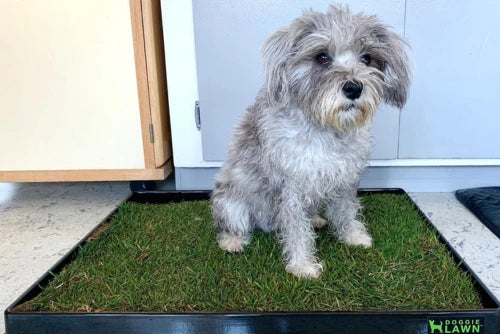
- Put a DoggieLawn real grass potty pad (from $34.85) in its tray at the far end. Real grass, not a pee pad: it's the surface your puppy knows from outside, and DoggieLawn's FAQ says its natural microbes break down urine, so the corner doesn't smell like one.
- Water bowl in the middle, no blankets between the zones. Anything soft between bed and grass becomes a third bathroom.
- Train the grass before the first long day with the DoggieLawn potty training video, three steps: start on a full bladder, keep a treat hidden in your pocket, place your puppy on the grass and say "go potty," returning them to the same spot until they go. Repeat 20 to 30 times over a few days.
- Size the pen for the puppy, not the room. Keep it tight with dividers at first, then open it up as accidents stop.

Featured Product
DoggieLawn Potty Training Boost
A scent cue for the grass corner of the pen. Spritz the lawn before your puppy's usual potty time, then pile on the praise when they use it.
That's the dog crate and playpen combo in full: the crate keeps teaching the holding-it habit at night and during short absences, and pen plus grass covers the hours in between. Once the pen stays clean for a couple of weeks, follow Humane World's progression: a gated room, then the house.
Crate vs playpen bottom line
Stop choosing. Nest them.
Crates teach a puppy to hold it. Playpens give a puppy somewhere to go when holding it isn't an option. Alone, each fails at the other's job, so crate and playpen combined is the setup that survives a real workweek: den at one end, DoggieLawn at the other, water in the middle.
Keep the limits in view: three to four hours in a closed crate for a puppy under 6 months, per Humane World, and roughly an hour per month of age before a break, per the AKC. Build the day around those numbers and the pen, not the reverse.
Crate vs playpen FAQ
Your questions, answered
Three questions owners ask before buying.
Is a Crate or Playpen Better for a Puppy?
For teaching a puppy to hold it, the crate. For any stretch longer than the puppy can hold it, the playpen, because it has room for a potty spot. Most working owners do best with the crate inside the pen, door open: den and bathroom in one footprint.
Can You Leave a Puppy in a Playpen Overnight?
You can. Leaving puppy in playpen overnight works if the pen holds a bed at one end and a grass potty at the other, since a young puppy will likely need to go before morning. Most puppies sleep through without a potty break by about 4 months, the AKC says, and until then Humane World suggests a crate in or near your bedroom so you hear them wake.
How Long Can a Puppy Stay in a Crate?
Humane World for Animals' answer to how long can a puppy stay in a crate is three or four hours at most for a puppy under 6 months, and the same for an adult still being house-trained. Per the AKC, roughly an hour per month of age, up to six hours at 6 months. Anything longer calls for a pen with a potty inside, a midday visitor, or both. In the crate vs playpen question, that is the whole case for the pen.
More puppy training reading
More from the DoggieLawn blog